
I used to think that my stealing skill only worked on what was worthless to a person.
But just before I died, I realized that I could also steal the skills.
So I stole the regression.
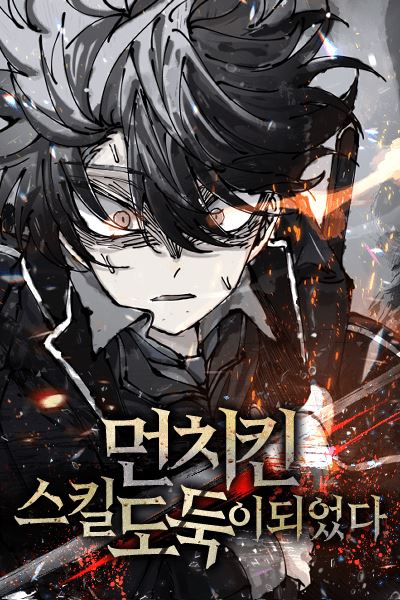
I Became A Thief Who Steals Overpowered Skills
- Genre: Action
- Author: nolepguy
- Translator:
- Status: Ongoing
- Rating(3.8 / 5.0) ★
Recommendation Lists
These are recommendation lists which contains《I Became A Thief Who Steals Overpowered Skills》You should give them a visit if you're looking for similar novels to read. Alternatively,
you can also
create your own list.
Latest Release
-
novel cran C60
-
novel cran C59
-
novel cran C58
-
novel cran C57
-
novel cran C56
-
novel cran C55
-
novel cran C54
-
novel cran C53
-
novel cran C52
-
novel cran C51
-
novel cran C50
-
novel cran C49
-
novel cran C48
-
novel cran C47
-
novel cran C46
-
novel cran C45
-
novel cran C44
-
novel cran C43
-
novel cran C42
-
novel cran C41
-
novel cran C40
-
novel cran C39
-
novel cran C38
-
novel cran C37
-
novel cran C36
-
novel cran C35
-
novel cran C34
-
novel cran C33
Popular Reviews
The original Ghost in the Shell manga is truly a gem in the realms of manga, philosophy, and cyberpunk.
1.5 is a collection of stories that didn't make it into either the original or volume 2, and were released after the second installment.
This edition lacks the depth of speculative content found in the original, and its brief, standalone cases are less impactful.
The charismatic Major is almost entirely missing. Instead, Togusa, Batou, and Aramaki take center stage.
The absence of an overarching storyline is one of its major flaws. Additionally, there is only one significant philosophical concept that Masamune seems to explore throughout this volume.
I also have concerns about the art. It is clearly inferior, with a rougher and more sketchy style compared to the original manga. Proportions and angles are frequently awkward and off-putting.
Overall, this manga is fairly unremarkable—neither particularly good nor bad. If you're planning to read GitS 2, you might as well read this. However, it would probably be smarter to simply stop after reading the original.
<p>
Ghost in the Shell 1.5: Human-Error Processor is the third installment of the GITS trilogy, so if you haven't read the first two (I'll explain why reading GITS 2 is worthwhile shortly), I highly recommend doing so before diving into this one.
The manga should be read in this sequence: Ghost in the Shell → Ghost in the Shell 2: Man-Machine Interface → Ghost in the Shell 1.5: Human-Error Processor.
Story: I believe GITS 1.5 is essential for fully understanding GITS 2. It provides additional context for some of the more complex elements in volume 2. If you didn't enjoy GITS 2 as much as expected, reading this could offer valuable clarification.
Art: As with Shirow's other GITS works, the art style remains consistent and, if anything, has become even more detailed. My copy is the Deluxe Edition, formatted Right-to-Left with Japanese sound effects instead of English ones. Personally, I prefer it this way.
Characters: GITS 1.5 introduces some new characters, though I won't spoil who they are. The returning characters look similar to their previous appearances, but we also see some new gadgets in action.
Enjoyment: I thoroughly enjoyed reading 1.5 because, when I was working through GITS 2, I found it confusing and struggled to keep up with the plot. 1.5 returns to the style of GITS 1, making it easier to follow and appreciate. Some scenes made me laugh, but what I loved most were Shirow's side notes, which explore how cyborgs interact with various elements. He also elaborated on events mentioned in conversations that readers might not have fully understood. My favorite part was the translations of street and shop signs, along with the smaller, non-dialogue comments from characters.
Overall, I wholeheartedly recommend this, but please ensure you've read the other volumes first.
In the aftermath of the Puppeteer case, Section 9 has found a semblance of stability. Major Motoko Kusanagi has vanished, leaving Batou to step into her shoes as the team's lead operative. Togusa now partners with Azuma, the sharp-sniffed new recruit, while the rest of Section 9 remains as sharp and formidable as ever.
The story kicks off with a fresh mystery involving a cyber-criminal eerily reminiscent of the Puppeteer. Someone has commandeered the corpse of a prominent businessman, remotely animating it to feign life. With the Major having merged with the Puppeteer, an unspoken question lingers: could she be behind it?
Human-Error Processor unveils four 'lost stories' from the series—essentially tales that took over a decade to see English translation. Unlike the expansive arcs of the original manga and Man-Machine Interface, GITS 1.5 opts for a more modest scope. Each story stands alone, culminating in its own resolution without the overarching narrative seen in its counterparts.
A recurring theme throughout is the persistence of systems beyond individual lifespans. How does the next generation thrive as the previous one fades? Can achievements endure through replication? When do inherited burdens finally dissipate? Near the end, Chief Aramaki and Batou delve into these questions in a concise yet powerful exchange.
This theme resonates deeply given Motoko's departure. She was their cornerstone, so how do they endure without her? The answer seems too simple: Section 9 functions as a collective of exceptional individuals forming an extraordinary unit. Yet, this conclusion feels rushed. Motoko was indispensable, so why does her absence seem inconsequential? It bothers me. She was the central figure of the first manga, yet her absence leaves no apparent void. In fact, it's barely acknowledged.
I don't object to Motoko's limited presence; after all, the sequel delves into her post-Puppeteer adventures. However, Shirow missed an opportunity to explore the dramatic tension her departure could have sparked. Instead, the narrative glosses over what should have been profound ripples. While the action sequences are visually stunning and engaging, they lack emotional depth. Sure, it's impressive, but where's the impact?
Azuma epitomizes this issue. Rather than enriching the narrative or cast, he serves merely as comic relief, Togusa's counterpoint, or an expositional device. This works for pacing but falls flat otherwise. We're told his heightened sense of smell surpasses trained drug-detection dogs, yet he uses this ability sparingly. More often, he complains about unpleasant odors, refusing to contribute due to potential discomfort. Really? You're part of Public Security and shy away from investigating because of stale urine or moldy food?
I struggle to understand his purpose. If Section 9 comprises elite hand-picked operatives, Azuma's inclusion seems questionable. A rogue fuchikoma with erratic AI would provide more entertainment than a character who oscillates between uselessness and distaste.
Speaking of fuchikomas, they make rare appearances here. Once the primary source of humor, their brief cameos only highlight Azuma's overexposure, making his frequent scenes even more disheartening.
Despite these critiques, the manga remains enjoyable. Watching beloved characters tackle grim cases is its core appeal. Both Batou and Togusa capably fill the 'Motoko-gap,' proving themselves as compelling protagonists. The dialogue is sharp, the combat intense, and the mysteries captivating. Fans of Solid State Society will appreciate seeing how the source material translates onto screen. Perhaps this isn't lightning striking twice, but it's still a thrilling ride.
Shirow's artistry retains the same meticulous detail as before. Characters are seamlessly integrated into their bustling metropolis, inviting readers to linger on each panel and absorb every element. Every architectural structure, futuristic vehicle, hospital interior, and insectoid robot reflects painstaking effort. Action sequences are dynamic, gory, and choreographed with flair. The few fully colored pages are breathtaking, commanding attention from the outset.
It's no exaggeration to say Shirow crafts entire worlds.
Ultimately, critiquing this work feels almost unfair. It's incomplete by design, meant merely as supplementary material—a dessert to Ghost in the Shell's main course. Simultaneously, it subtly foreshadows the sequel, Man-Machine Interface. Having delivered glimpses into further Section 9 missions, albeit briefly, is it sufficient? Maybe. Fascinating ideas emerge... only to fade before developing further. This is a manga yearning for a cohesive narrative to unify its elements. While not every segment of the original manga centered on the Puppeteer, there was always a sense of continuity, leading inevitably to its climax thanks to Motoko's relentless curiosity and prowess.
For fans, it's more of the same and undeniably fun, but newcomers should be cautious. Lightning didn't strike twice here—if it did, it struck in the sequel. Here, there's merely residual sparking.
And that's barely enough to power a single fuchikoma's wisecracks.<p>
Recommended!
Leave a Review
Part 1. Rate (click Star to vote)
Part 2. Login to account
Part 3. Write your review
Directory of Novels. where you can find Novels
Copyright novel cool © 2018–2024 — All rights reserved